Showing posts with label aurora colony. Show all posts

3/27/2015

Hubbard, Oregon -- A Walking Tour

Hubbard, Oregon -- A Walking Tour

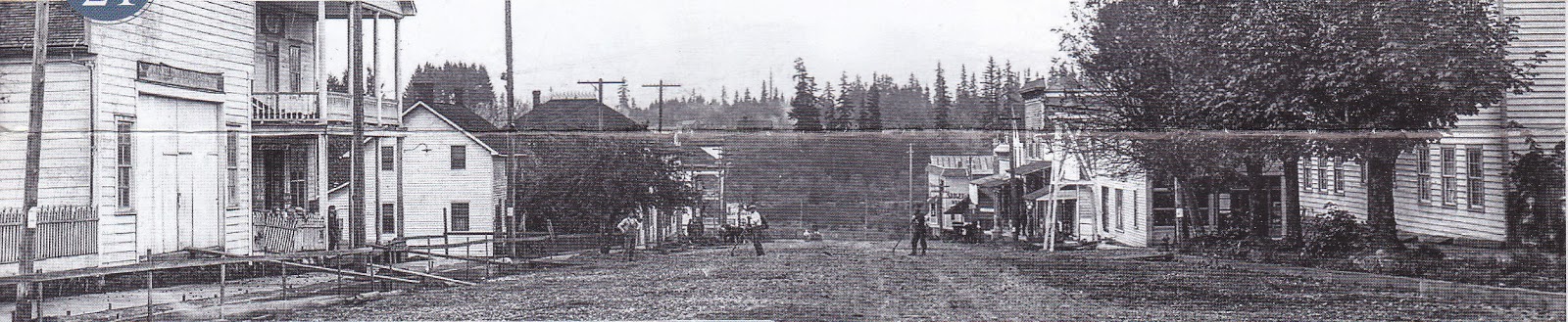
Hubbard is a small community in the Willamette Valley, and if you didn't know it was there, you might miss it driving along Highway 99E. However, it has an interesting history and has been a premier agricultural region since its establishment. The town was named for Charles Hubbard, a Kentucky native, who crossed the plains to Oregon by ox team in 1847. Soon after the Charles Hubbard family arrived in Oregon, they rented a squatter's cabin on the ridge between the Pudding River and Ferrier Creek (also called "Deer Creek" and now known as Mill Creek). That cabin was owned by Thomas Hunt, who left the area on a gold-seeking expedition. He never returned. Subsequently, Charles Hubbard acquired 400 acres of land in and around the present city. The town was named for him because he offered 10 acres of land as an inducement for the Oregon-California railroad, which was under construction from 1868-78. The railroad accepted the offer and was built through Hubbard in late 1871 right after the first store was built in 1870 by Aaron B. Gleason. The Oregon Legislature voted to grant Hubbard a charter and the right to incorporate in February, 1891. As with many towns, the arrival of the railroad spurred development, and Hubbard grew to a population of 500 by 1910.

Old Hubbard Train Depot, early 1900s


Beaver State News 11/9/1911
Several of the original community buildings in Hubbard no longer remain, including the Assembly Hall, community bandstand, "Commercial House" Boarding House, Southern Pacific Railroad Train Depot, and others. The community bandstand was located on the commons in front of the railroad depot. A brass band was organized in 1882 and another assembled in 1911. Although most commercial structures are gone, many homes built by the town's founders remain and have been beautifully restored and maintained. This walking tour is a work in progress and will be updated as additional information becomes available. Dates on the homes require verification.


1. Hubbard Pharmacy Building (1890/95): The focal point of the town is the Hubbard Drug Store Building located at 3569 3rd Street.  Originally opened and operated as the Calvert & Scholl Drug Store, it was later renamed Hubbard Drug Store. Joseph Calvert  eventually sold the building when he became the vice-president of the adjacent State Bank of Hubbard. 

3rd Street in 1965 and 2015


Beaver State News 4/6/1911
Beaver State News 12/8/1910
At the turn of the century, Hubbard was a thriving commmunity with two saloons and a large number of businesses, including a bakery, operated by A.O. Griswell and his daughter, a boarding house, confectionery, hotel, photography studio, meat market, shoe shop, furniture store, millnery, and of course many businesses meeting the needs of local farmers.

Another local attraction was the nearby Wolfer's Mineral Springs owned by George Wolfer. The waters were said to be an aid for arthritis. The mineral spring is located to the West of Hubbard on the east bank of Mill Creek.


From The Sunday Oregonian, November 24, 1912
The Sunday Oregonian November 24, 1912

2. Dr. Edward Schoor House (1920):  The son of Dr. Jacob Schoor of Germany, Edward Schoor (1871-1952) came to Hubbard around the turn of the century after graduating from medical school in Kansas City. He practiced with his father in Kansas City for nine years and maintained an office there for twenty-two years. He relocated to Portland, Oregon, spending six months in that city while passing the state board examination and working as a house doctor for the Hoyt Hotel. After he successfully passed the exam, he moved to Hubbard and married his second wife, a nurse, in 1913. Tragically, she was killed in an automobile accident at a railroad crossing in 1920. Dr. Schoor was seriously injured. He remarried in 1922 and had one daughter. His 11- bed hospital was on G Street between 3rd and 4th Streets.


3. John Scholl House (1890): John Scholl was born in Bethel, Missouri in 1847 and accompanied his parents to Oregon in 1881. He was a carpenter and farmer who moved to Hubbard in 1898 where he purchased an interest in the hardware store of his brother-in-law, George Fry in 1903. He served as a member of the city council and as school director for 12 years. He had four sons, Henry F., George F., Lawrence M. and David J. 


4. Bahne Paulsen House (1917): B. Paulsen (1870-1954) was born in Germany in 1869, and came to the United States in 1870. He lived in Wisconsin for 20 years, in Nebraska for 22 years, and moved to Hubbard around 1911. He was the son of Ebe Christopher Paulsen and Anna (Hilgen) Paulsen originally of Germany. Bahne was President of the Hubbard State Bank, and owned a store called B. Paulsen & Son.


5. George W. Knight House (1905):  In partnership with Peter Susbauer, G.W. Knight (1874- ) operated a department store in Hubbard, Knight and Susbauer. Besides groceries and dry goods, they kept flour, feed, clothing and furniture. G.W. Knight was born in Canby, Oregon to Dr. Charles Knight, a Canby physician who emigrated from Missouri to Oregon in 1871. George was employed for a time in his father's drug store and at age 18 accepted employment with Carlton & Rosecrans, Clackamas County's largest department store. He moved to Hubbard in 1899 and bought out the general merchandise business of George H. Beebe.


6. Lawrence M. Scholl House (1908): L.M. Scholl (1875-1963) was born in Aurora, Oregon. His parents and grandparents were members of the Keil party from Bethel, MO. His father, John Scholl, was a carpenter and farmer who relocated to Hubbard from Aurora in 1898. In 1903, John purchased part interest in George M. Fry's general merchandise business with his elder son George F Scholl. Lawrence Scholl attended Portland Business College, graduating in 1898, and was appointed assistant postmaster in 1900 under J.L. Calvert. This house was built entirely of lumber from the nearby sawmill at Scotts Mills, which was freighted on the railroad to Hubbard. 


7. George W. Dimick (1913): G.W. Dimick (1837-1918)  was the son of one of the oldest pioneer farmers of the Willamette valley, Augustus R. Dimickwho had been a big factor in the growth of the agricultural and livestock industries in Hubbard. He brought his family across the plains to Oregon in 1847. Augustus Dimick is noted for bringing potato seeds for “early or shaker blue” potatoes from Michigan and planting them throughout Northern Marion County.  They were nicknamed “Dimick Potatoes.” George Washington Dimick and brother J.B. Dimick had, by 1878, taken over the ownership of much of the original land claim of their father, Augustus. George W. owned and managed an apple orchard, grain, and livestock farm of over a thousand acres near Hubbard. He was a stock breeder Short-horn and Aberdeen cattle. He was also active in politics and was an organizer of Oregon's Prohibition party. He eventually retired from farming and moved to Oregon City. 


8. J.L. Calvert House (1895):  The Daily Capital Journal (April 13, 1910) referred to Calvert as being "almost the father of the town." He was born in Clackamas County in 1856 and moved to Marion County with his family around 1863. They settled on a farm between Woodburn and Gervais. In 1877 he became employed in Gervais as a clerk in a drug store. He opened his own drug store in Hubbard in 1881 and operated it for almost 30 years. He sold the business in 1910 and, as one of the organizers of the adjacent Hubbard State Bank, worked as a cashier and director there until 1915. He held several official positions from postmaster, county recorder, justice of the peace, and road supervisor to representative in the state legislature.

9. George M. Fry House (1908):  Prior to their deaths in 1849 and 1854, George Fry's parents had moved their eight children from Pennsylvania to Bethel, Missouri where they joined William Keil's Christian communal society. An orphan at age 12, George (1842-1917) migrated to Aurora, Oregon in 1863 along with Keil's followers. George remained a member of the colony becoming a jeweler's apprentice. Once he learned the trade, he relocated to nearby Hubbard in 1887 and established a jewelry store there. In 1890, he acquired a general merchandise store in partnership with Harvey A. Hinkle. The business was operated under the name of  Fry & Hinkle, until Mr. Hinkle sold Fry his interest in 1893. Once established and profitable, Fry sold the business to H.A. Beebe in 1896 and opened a hardware store in partnership with John Scholl, selling his interests to George Scholl after three years. He built a warehouse which he operated until 1911 when he retired owning 200 acres and several residential blocks of Hubbard. G.M. Fry was also involved in handling his sister's (Elizabeth Fry Proebstel [1833-1911]) 800-acre estate. Ms. Proebstel was a wealthy widow of land owner Wendell Proebstel. She is said to have built a pretentious home in Hubbard on the corner of 4th and A Streets in 1880, which was later remodeled into an apartment house. That structure no longer remains. The G.M. Fry family included wife, Caroline, son Frank W. and daughter Sarah A, wife of George's former business partner Harvey A. Hinkle.  


George M. Fry and Family

10. Winfield Scott Zachary Buchanan House (1887): W.S. Buchanan (1847-1919) was a pioneer from Henderson County, Illinois who traveled to the Washington Territory by ox-team in 1854 with his father, George Washington Buchanan, and family. They settled in Lewis, Washington for many years. He relocated to Marion County and built this home with his wife, Susan M.


11. Dr. Samuel W. Weaver House (1895): Dr. Weaver came to Hubbard in 1886 to practice medicine. He was a physician and surgeon and received his training in Pennsylvania. He was born in 1853 and received his education in the College of Physicians and Surgeons in Baltimore, graduating in the class of 1882. He began his practice in Washington County, PA where he remained for two years. He then practiced in Paradise Valley, Nevada for two years before moving to Hubbard in 1886. He was also an accomplished violinist and made several violins. He married Alice Grim, daughter of Judge J.W. and Frances E Grim. They had two children, Frances E and Guy G.


The Weaver House in 1965 (Historic Images of Oregon)

12. The Armory Building (1892): In the late 1880s a group of investors constructed the Hubbard Armory for Company E, Second Regiment of the Oregon National Guard, which disbanded after the war in the Philippines.  The major stock holder was G.W. Dimick, who sold the building to the city a few years later. It became the city hall and community center hosting various public events such as ice cream socials, poultry shows, funerals, Hubbard High School performances, and city council meetings. 


References:

  1. The Centennial History of Oregon 1811-1912 by Joseph Gaston. S.J. Clarke Publishing Company, Chicago (1912).
  2. Daily Capital Journal (various)
  3. USGenWeb and Ancestry.com
  4. Portrait and biographical record of the Willamette valley, Oregon, containing original sketches of many well known citizens of the past and present, Oregon, Chapman Publishing Company (1903) 
  5. The Bulletin. Volume IX, Number 39, September 24, 1980, Molalla, OR.
  6. Woodburn Independent, June 30, 1976.
  7. The Beaver State News and Hubbard Herald (various dates between 1907 and 1912).

5/16/2014

The Aurora Colony

The Aurora Colony - Aurora, Oregon: The town of Aurora, Oregon is located in the north central Willamette valley, about 24 miles south of Portland. It was established by a small group of scouts from Bethel, Missouri ("Bethelites"), who left that area in 1853 to find a site in the Pacific Northwest to establish their German-speaking, Christian commune. The group eventually settled on a tract of about 500 acres just south of the Willamette River in Marion County, Oregon. The land was purchased and named Aurora after the leader, William Keil's (1812-1877), daughter. The colony eventually grew to around 600 colonists until William Keil died in 1877. After his death, communal activity ended and properties went to individual farmers.

While Dr. Wilhelm Keil's house no longer remains, several homes of the original colonists have been preserved. Some historical photos of the colony, including one of Keil's home can be found on the Oregon Encyclopedia's web site, and information and photos on the colony members are provided by the Old Aurora Colony Historical Museum. Today, over 30 original colony buildings survive including the home of Emma Wagner Giesy (1833-1916), wife of the scout leader Christian Geisy, and sole female on the first trip from Missouri:

Emma Wagner Giesy Home Aurora Oregon
Emma Wagner Giesy House
The George Kraus family also lived in this same house from 1881 to 1867. Author, Jane Kirkpatrick, has written a novel about Emma's journey with this group of settlers in "A Clearing in the Wild." It is historical fiction based on the life of colony members and their migration to the west.

John Hans Stauffer was also a member of the original scouting party and settled three miles south of Aurora, and the family farm still exists today just north of Hubbard, Oregon.

Other colonists who arrived later included Christian Zimmerman (1838-1920), a carpenter. The Zimmerman House remains on the corner of Liberty and 3rd Streets in Aurora. A 150 year old walnut tree still stands in front of the house:

Christian Zimmerman House
Anton Will (1871-1962) built a house for his wife, Anna, directly across from the Zimmermans:

Anton Will House
Henry Kraus (1845-1918) was a carpenter and storekeeper who built a home on Liberty Street:

Henry Kraus House
Across the street from the Henry Kraus House is the Leonard Will (1823-1906) house, the colony butcher. Leonard and his wife, Josephine, had 7 children:

Leonard Will House
According to the Old Aurora Colony Museum, the original colony was non-denominational. Lutherans and Presbyterians who arrived in the area later built a Presbyterian Church in 1911:

Aurora Presbyterian Church
Charles Snyder (1844-1924) was a settler from Ohio. He built a house on the corner of Liberty and 3rd Streets where he lived with his wife Christina Schuelle Snyder and their seven children:

Charles Snyder House

One historical image provided by the Aurora Colony Museum (below) shows Main Street in 1908. Several of the original buildings still stand today.


For comparison, a photo of Main Street taken in 2014:


In both photos, the WM Keil and Company Store stands distinctively on the left.....

Wm Keil and Company Store

next to the William Fry House:

William Fry House

William Fry (1835-1906), from Pennsylvania, was a blacksmith who settled in Aurora with his wife Annie and their four children.

Across the street was the Will-Snyder Store, built in 1912:

Will-Snyder Store

Other buildings that no longer exist include the Aurora Colony Drugstore, which was torn down in 1962 and Aurora Colony Store, which was torn down in 1931 to make room for Highway 99 East that now runs through the middle of town. At one time an impressive hotel also stood near the railroad tracks called the Aurora Pioneer Hotel (1867-1934). A historical photo of the hotel can be seen on the Canby Historical Society web page. The only surviving building from the hotel complex is an octagon building located off 2nd Street. The historical use of the building is unknown.

Aurora Pioneer Hotel Octagon Building

The home of Jacob Miley (1838-1907) stands near the railroad tracks behind the Walter Fry house. Jacob was a settler from Ohio and built this home in 1867:

Jacob Miley House

The Walter Fry (1882-1974) House still stands on Main Street:

Walter Fry House

The Southern Pacific Railroad Depot is currently just adjacent to Walter Fry's home. It was formerly located near the old mill and relocated in 1990. Aurora was an agricultural town known mainly for hops, dairy and filberts. The food was also acclaimed as known from an article in the Portland newspaper, The Oregonian, which praised the fried potatoes, pig sausage, smoked ham, bread, cottage cheese, candies, jellies, and cakes... (Sreenivasan, J, 2008). Visitors were greeted by the community band which played on the roof of the Aurora Pioneer Hotel.

Aurora Depot

The Aurora State Bank building came from the Lewis and Clark Centennial Exposition in Portland and was relocated to Aurora in 1905. Lyn Topinka provides postcard images of the exposition. The bank's two original vaults remain, but are now used by a local winery which uses the building for its tasting room:

Aurora State Bank Building

The colony warehouse, or Ziegler's Warehouse, still remains and is currently used as an architectural salvage business. The remains of a grist mill are located in 1st Street adjacent to the warehouse (no photo). It was built by David Smith who was born in Ohio and came to Oregon in 1851. The grist mill was built in 1853 and destroyed by fire. Another was built the same year. Smith sold it in 1856 and moved to Yamhill County.  

Ziegler's Warehouse

Jacob Miller (1837-1916) was one of the original colonists. His house was built in 1889 and is located across the street from the Aurora Colony Museum:

Jacob Miller House

Finally, the current location of The Old Aurora Colony Museum is in an old ox barn on 2nd and Liberty Streets. The building was later converted to a store, and then to the museum.

Old Aurora Colony Museum Oregon
Old Aurora Colony Museum

Museum Interior